I finished Dressmaker recently and had a great time. A lot of people have been talking about it, rightly, because it’s a very good game. I did have a slightly more unique angle than a lot of people I saw playing however, because I know how to make and sew my own clothes, and have been since I was a kid. It would be impossible for me not to relate that experience into my time playing, so I decided to jump into that full-throttle.
Also, I’d like to take a moment to call out the absolute bastard1 who said the campaign in this game is short. I heard that and decided to commit myself to seeing it all the way through, and 45 hours later, I’m finally finished.
When I was stuck in I was well into enjoying myself, but also had the want to playfully stick my nose up at how the mechanics are realised and smug smugly at the discrepancies from the real act of sewing. That you really should be starting and ending your stitch lines with backstitching. That boiled wool doesn’t have a grain to follow despite the game saying otherwise (then remembering that some have knitted backing, which means it would). That patterns that include seam allowances are wrong because I’ve been brought up with ones that didn’t.2
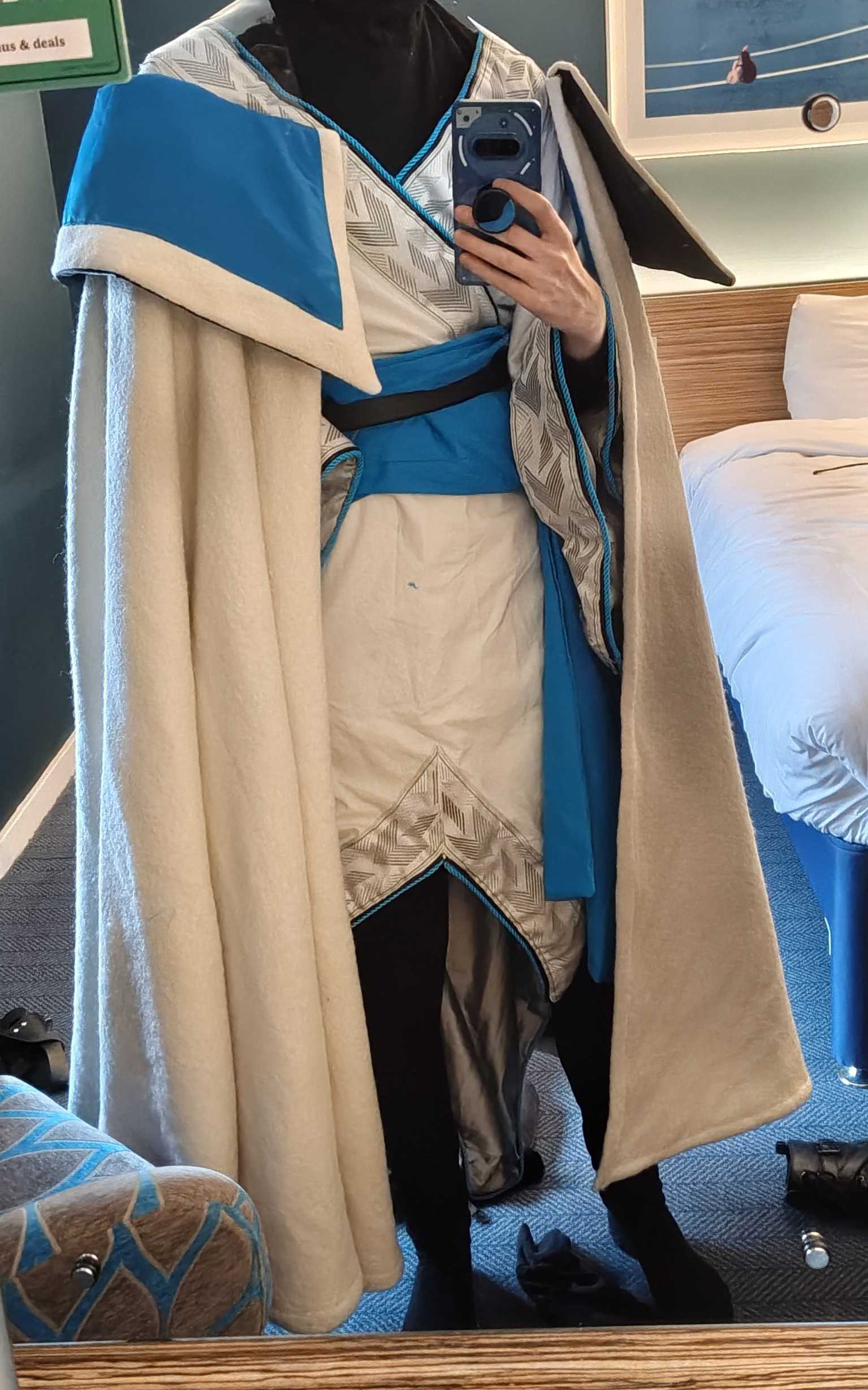
This was entirely tongue-and-cheek, and didn’t pull me away from the experience at all, if anything keeping me more invested. I think this also got amplified by the fact I was in the middle of a sewing project for a LARP kit during the bulk of my playthrough. There were days where I would do my fake sewing projects, stop playing, and then go do my real sewing projects. Here’s the result of that, if you’re curious:3
That playful back-and-forth then crystalised into actual thoughts on how Dressmaker approached its design. More, where it differed from the actual process of making clothes. With any simulation-adjacent game, where you’re specifically making a game and not training software transferable to the actual act, you will have to make concessions, simplifications, and just make things more fun compared to the real thing. In many cases, reality is a bit shit.
My knowledge of sewing meant I could see exactly where those concessions were made and why. It was a fun angle to play the game through, and then considering alternative ways of navigating those concessions, which got my design brain ticking.
Let’s go over some examples, starting with step one. Fabric is bought by the metre, now a modern standard for buying fabric. You get the roll cut to however many metres you need, and take it home. This is all about as close to the real thing as you can get. The only thing is not needing to haul piles of fabric with you on the train.
The differences come in how cutting patterns are handled. Laying out patterns is as you’d expect. You have grain directions, continual patterns that you need to transfer from 2D to 3D space (if you care about that), and have to geometry your way through trying to squeeze random sizes of paper onto a piece of fabric you know is too short. That brings us to the first difference, that if your pattern physically can’t fit, you can just buy more. All new fabric ties seamlessly to old cuts, making this a minor inconvenience at most. This is absolutely not the case in real life and I cannot count how many times in vain I have tried to go against basic mathematical facts and stomped back into a fabric store, scowling.
Not only that, once you’ve cut your fabric (a simple act of clicking a button), any mistakes are further trivialised. Say you realise your colour gradient is going the wrong way, or you actually need to shift your flower pattern a section over, you can just insta-recycle your piece and the hole left in your roll gets filled in again like nothing happened. There’s now no finality of making a cut, of double-triple-quadruple checking your lengths are correct, and completely eliminating the need to test out any patterns as you can endlessly retry on your final fabrics.
The actual act of sewing is, by far, the most simplified aspect of Dressmaker. It’s a simple matter of picking a line, sewing around an individual piece, repeating that for everything you’ve cut, and then you have a dress. How sewing actually looks, especially as you get to the end of your project, is tacking up what feels like endless lengths of fabric, lugging kilograms of material around to get the specific line you need to sew, catching your fingers on pins and swearing, and hoping you don’t run out of thread before this is finished. Dressmaker’s process is quite literally de-frictioned.
Having years of sewing behind me, all these adjustments almost feel like a knowing hand on your shoulder. Wouldn’t it be nice if fucking up fabric alignment meant you could psychic-beam your mistakes back to normal and start over without buying new fabric? Wouldn’t it be nice if getting a slightly too-short cut is fixed by gluing another length of fabric to this one? Wouldn’t it be nice if there was zero chance of your stitch lines fucking up the entire construction? And I’m sat here going, damn, that would be nice.
Then again, it makes me think of what that would have looked like if that experience was brought in. I enjoy friction in games. I like when you’re forced to make a choice between the easy way of just continuing on as you are, or going back the tougher way to get the result you want. Consider, for instance, the process of unpicking seams in Dressmaker. This is a matter of looking at a piece you want to change, clicking a button, and then it impossibly unfolds itself ready for you to magically re-weave back into your fabric roll. In reality, you realise you’ve fucked up, throw your pin cushion at a wall, and take a minute to decide if it’s worth sitting there neck-hunched unpicking the whole length stitch-by-stich, or just forging on anyway. Is it a piece of lining no-one will see? Fuck it. I’ve got the rest of this I want done by tonight.
As much as those frustrations are world-ending as you’re going through them, it does breed its own kind of creativity. Imagine fucking up a stitch line in Dressmaker, having knock-on effects for the rest of that section, and deciding to adjust the rest of the dress around that mistake and hide it with a wheelbarrow full of accessories, giving you an entirely different dress than the one you started planning. What if certain fabrics are delicate and can only stand one go on the sewing machine? What if handstitching was a time-consuming but sometimes required method? My thinking stretched further. I’ve worked with wool and know how damn heavy that material is. Could we have issues if you don’t account for weights of different materials? Also, lining. People pay good money for lining. You know how annoying it is to try figuring out how to inverse-attach lining to a jacket? With sleeves? Imagine the gameplay you could design around that!
All these points, however, aren’t design flaws. That’s underscored a bit in my last point; fabric topology is hellish enough in real life, and trying to program fabric to do that gives me a headache just thinking about it. Just running to realism for the sake of realism ignores the most important question about analysing games: what experience are the designers trying to make? The Dressmaker devs have an experience they’re crafting towards—a vision. If they have that vision, and achieve that vision, as much as you might disagree with that vision, I believe that’s the only thing you should ever define as “good” game design.
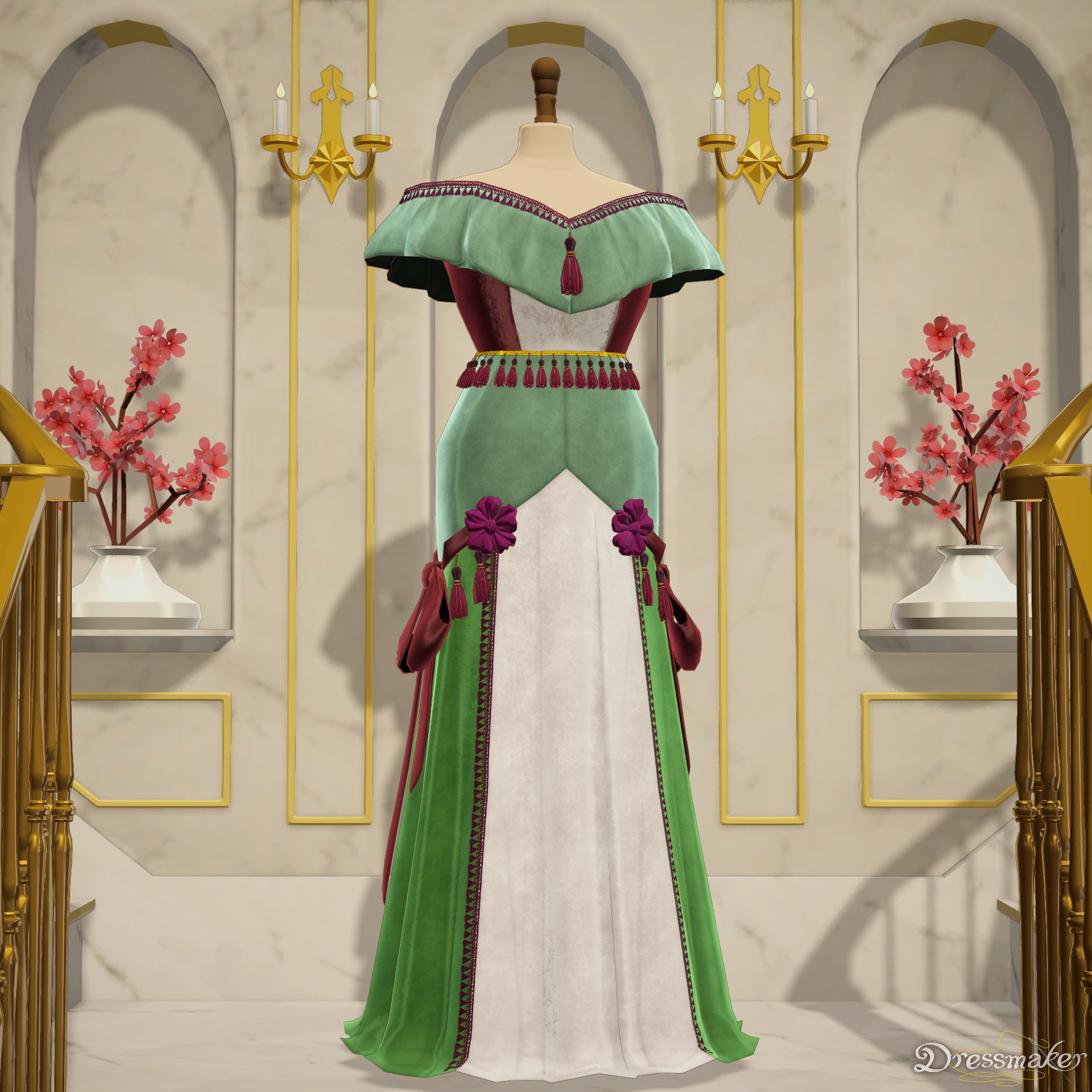
It’s why I think Dressmaker has stuck with me. Discrepancies to the actual act of sewing don’t feel like removing friction for the sake of removing friction, but instead like focused choices. They have a distinct POV and are sticking to it, striking their own balance between the time investment and work of making an actual dress, against the desire to share pretty pictures on Tumblr. You can see how that balance does succeed in the experience they’ve created: people intentionally avoid the ruffle dress for the amount of pieces you need to cut and lines you need to sew, giving whiffs of the experience of giving a stink-eye to patterns you know are going to consume your next month.
And it’s been said a million times before, especially across the thousands of reviews it’s received, but the balance it’s struck has fully inspired both sewers and non-sewers alike. Being close enough to the real thing to get that excitement of making with your own digital hands, with enough streamlining to let you focus on the actual goal, of making pretty dresses. And with that, still managing to keep the process mostly intact. If someone came up to me and said they wanted to start making their own clothes, and they were inspired by Dressmaker, I’d know exactly what they already have a grasp on, what they need to become aware of, and know what to draw their attention towards to make that jump as enjoyable as possible.
That’s pretty cool.
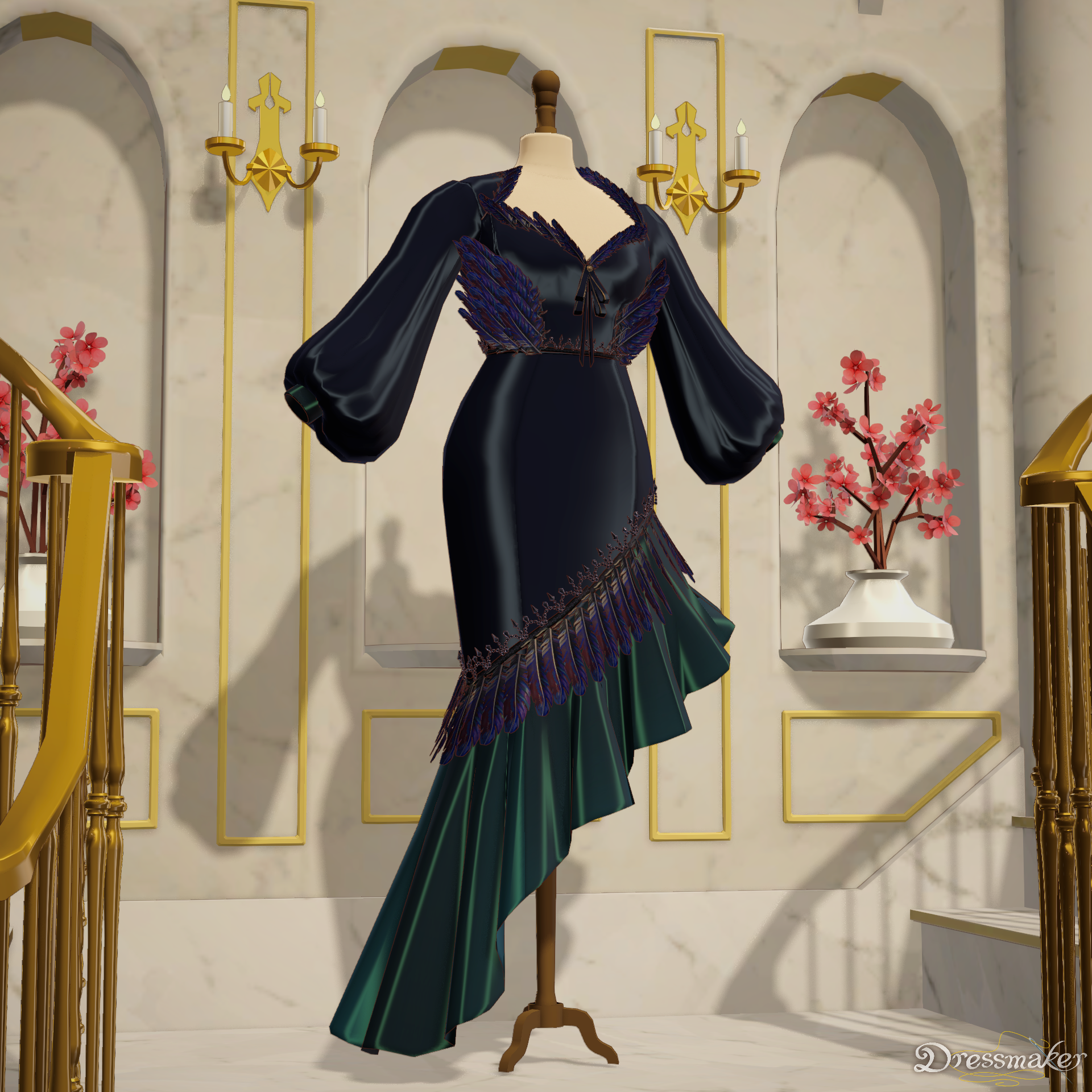
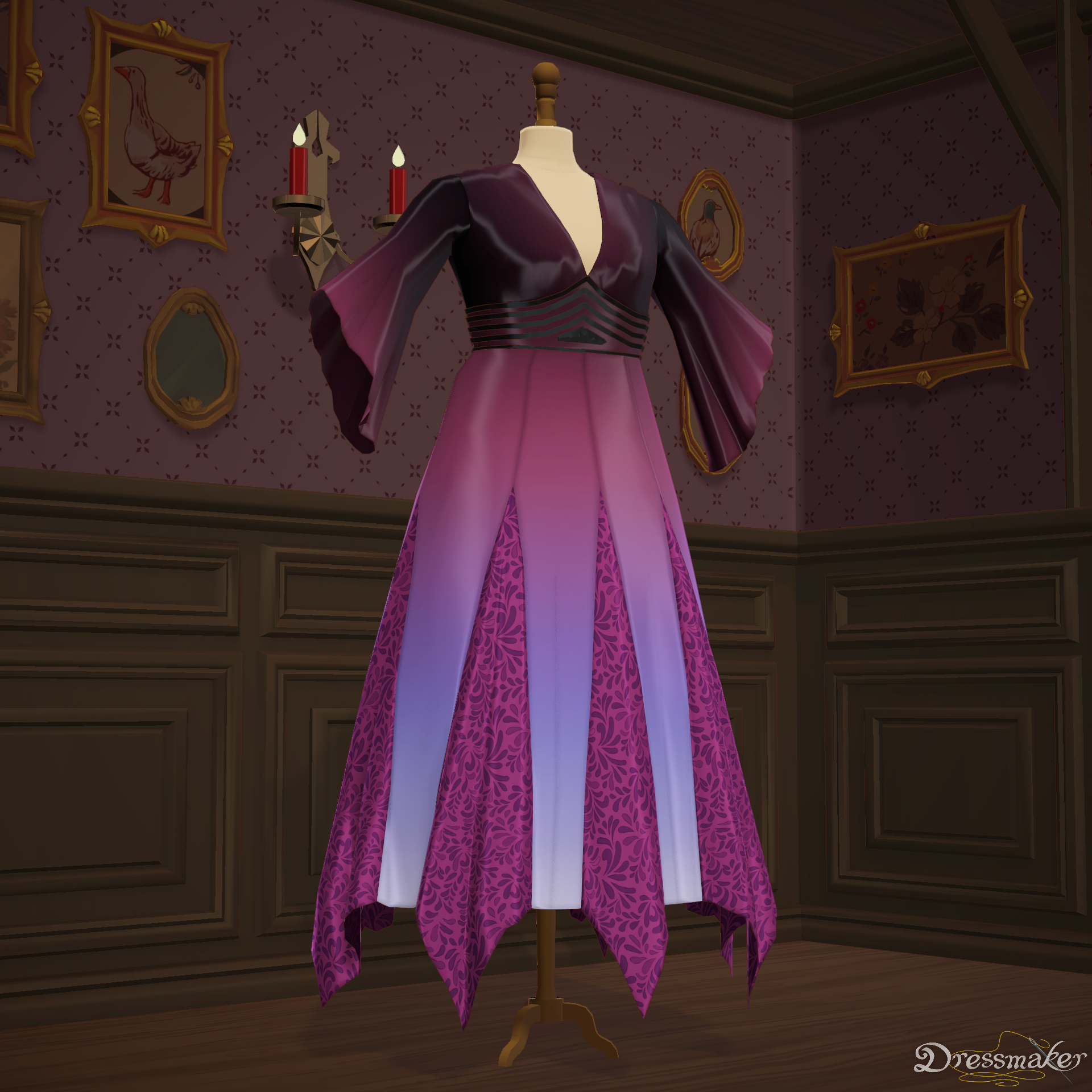
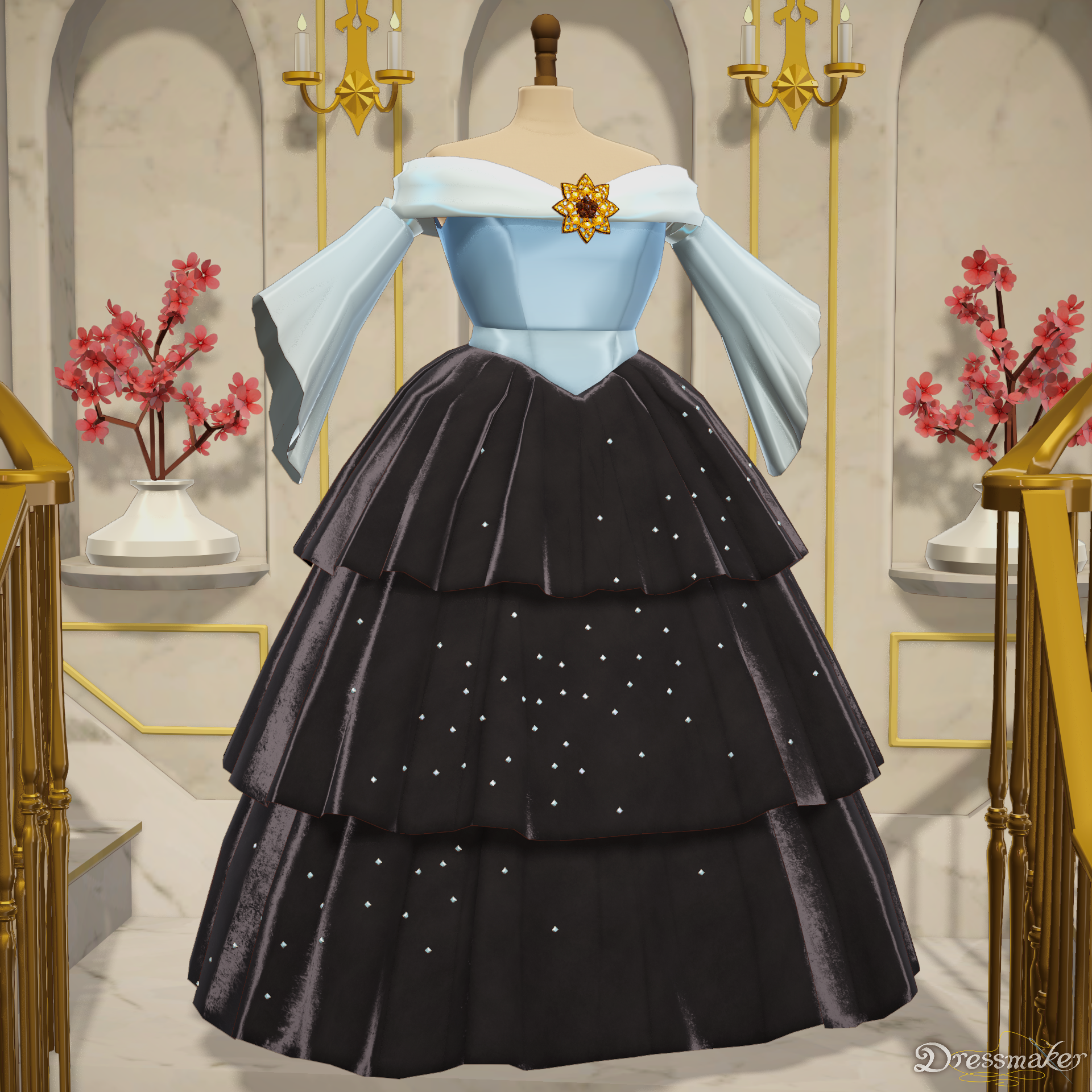
Further thoughts on “girl games”
I didn’t really have a place to bring this into the full post, but it’s something that kept bouncing around my head as I played, and has been bouncing around long before that. Consider this an extended footnote.
As a kid, growing up as a girl, I was given girl games. You know the ones. Shopping fashion makeup. Boys mall popularity shopping parties. I loved playing them, because they were games and games were fun, and some of them were even a bit good. Of course, to everyone else, the “girl game” was a disposable category. Entirely frivolous, nothing of value, and something to be overlooked and discarded by patriarchal and feminist game critics alike.
And now all of a sudden, relabeled as “cosy”, the “girl game” is one of the most popular and profitable and most-discussed genres right now.
Which isn’t to say that “the cosy game” is suddenly this absolved category that’s been accepted into the videogame canon without pain. It’s still more than derided by the Capital-G Gamer and culturally feminised, and certainly criticised with genuine progressive insights. But I find it hard to see the meaningful difference between Dressmaker and the dozens of fashion designer games I played on my DS.
Which also isn’t to say that a majority of those girl games from the 2000s weren’t atrocious, both in actual gameplay and that specific strand of misogyny from that era. But then again, what makes the girl game any more misogynistic than the standard AAA fare from 2006? What makes it an exception to 90% of every genre being trash? Despite the fact they often weren’t great, I feel some kind of… resentment? I guess? That the tastes of my younger self were put down so much, and now they’re easy journalism fodder?
I dunno. My thoughts here are messy and aren’t really formed to a coherent point, but it’s something I keep coming back to. Maybe I’ll actually have something of worth to say on this in the future.
-
(a comment I read somewhere) ↩︎
-
This one was particularly funny because shortly after I complained about this to friends, I saw there was a toggle to turn seam allowances off. At first I thought this was just a contrarian toggle, with nothing gameplay-wise actually changing (and, in fact, making it harder to line pieces up without seeing the seams), then realising this was an easier way to get patterns aligned. ↩︎
-
And in a slightly IYKYK manner, if you see me on the field don’t be afraid to say hello. ↩︎